EN
EN
 fr
fr  de
de  es
es  it
it  ru
ru  pt
pt  ar
ar  th
th  pl
pl  ro
ro 
Concrete surface preparation is not simply a matter of removing an old coating. The condition of the concrete, the existing surface contamination, the required Concrete Surface Profile (CSP), and the next coating system all influence which floor shot blasting solution is appropriate. Selecting equipment based only on working width or motor power can result in unnecessary passes, inconsistent preparation, or a surface that does not meet the coating specification.
For contractors, surface-preparation companies, private construction-service providers, and equipment distributors, a better approach is to start with the concrete condition and required surface result, then evaluate machine capability.
Start With the Existing Concrete Condition
The first step in floor shot blaster selection is understanding the condition of the concrete before mechanical preparation begins.
A concrete floor may contain laitance, dust, curing compounds, paint, epoxy, adhesive residues, corrosion-related contamination, or other materials that affect coating adhesion. The substrate may also vary considerably across one project.
AMPP's concrete surface preparation guidance emphasizes evaluating the existing concrete and establishing requirements for cleanliness, profile, contaminants, moisture, and other acceptance criteria before applying protective coatings.
This means the same floor shot blasting machine may perform differently depending on the substrate. A relatively sound concrete floor with a thin surface coating presents a different preparation requirement from a heavily contaminated or uneven industrial floor.
Before requesting equipment recommendations, it is useful to document:
Existing coating or surface material
Approximate coating condition and thickness
Concrete hardness and visible defects
Contamination or residues
Required final surface profile
Total floor area
Project completion requirements
A floor photograph can also provide valuable information during the initial equipment-selection discussion.
Match the Required CSP to the Coating System
CSP is a standardized way of describing the texture created on a concrete surface, and the required profile should be determined by the subsequent coating or overlay system.
The ICRI Concrete Surface Profile system ranges from CSP 1 to CSP 10, representing progressively more textured concrete surfaces.
AMPP's current concrete surface-preparation standard identifies shot blasting among the mechanical preparation methods capable of producing CSP 3–9, depending on the equipment, substrate, abrasive system, and preparation conditions.
Therefore, “more aggressive preparation” is not automatically better. The objective is to create the surface profile specified for the coating system while maintaining an acceptable substrate.
For example, a project requiring a relatively moderate profile should not be evaluated in the same way as a heavy-duty industrial coating project requiring substantially more surface texture.
| Project condition | Selection consideration | Acceptance focus |
|---|---|---|
| Sound concrete, light preparation | Consistent surface treatment | Cleanliness and uniform profile |
| Existing coating | Coating-removal capability | Remaining coating and concrete condition |
| Heavy industrial floor | Higher preparation demand | Profile, cleanliness and substrate integrity |
| Coating replacement | Match preparation to new system | Specified CSP and coating compatibility |
| Variable concrete condition | Consistency across different areas | Test areas and documented results |
The final CSP should always be confirmed against the coating manufacturer's requirements and the project's applicable specification.
Blasting Width, Travel Speed, and Productivity
Machine productivity should be evaluated as part of the complete project requirement rather than treated as a single machine specification.
QINGGONG's published floor shot blaster range includes models with effective working widths from 200 mm to 800 mm and stated concrete productivity from approximately 80 to 450 m²/h, depending on the model.
These figures demonstrate why machine selection should consider project scale. A compact model may be appropriate where access is restricted or the working area is relatively small, while a wider machine can be more relevant for large open floor areas.
However, published productivity should not be interpreted as a guaranteed project output. Actual production depends on concrete condition, coating condition, required surface result, layout, edges, preparation passes, dust-control arrangements, and site organization.
For B2B equipment buyers, a useful calculation is therefore not simply “How many square meters per hour does the machine achieve?” Instead, ask whether the proposed equipment can support the required project area and completion schedule under the expected substrate conditions.
When One Preparation Pass Is Not Enough
The number of preparation passes should be determined by the existing surface and required final condition rather than by a fixed machine setting.
Some concrete floors have relatively uniform surfaces, while others contain areas with different coating thicknesses, contamination, repairs, or changes in concrete hardness. As a result, a single preparation approach may not produce the same result across the entire floor.
A practical selection process should therefore distinguish between:
Surface removal — determining whether the machine can address the existing coating or contamination.
Surface profiling — determining whether the prepared concrete can achieve the specified CSP.
Surface uniformity — checking whether the final surface remains consistent across different areas.
If the existing floor contains severely damaged concrete or substantial local defects, shot blasting may also need to be considered alongside other preparation or repair methods rather than being treated as the only solution.
Dust Collection Is Part of Equipment Specification
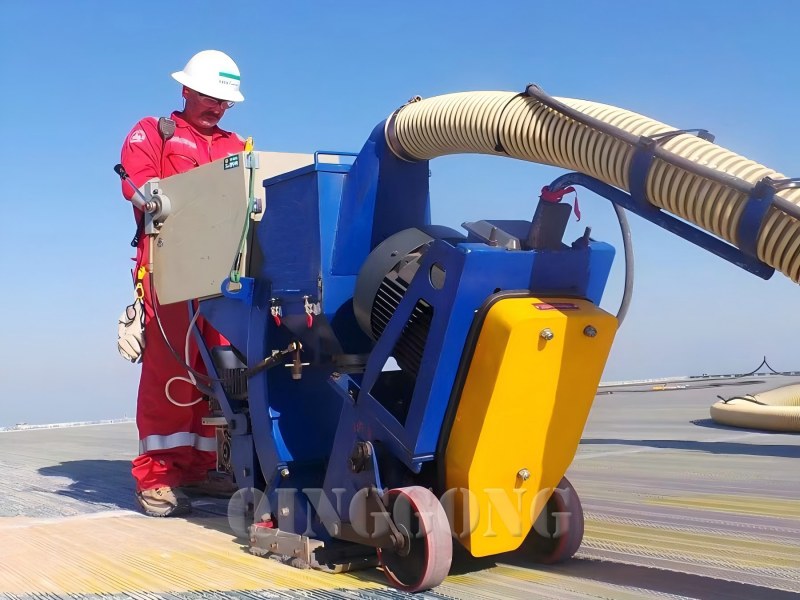
Dust collection should be considered an integral part of a floor shot blasting system because surface preparation can generate airborne dust and fine particulate matter.
OSHA identifies concrete and other materials containing crystalline silica as potential sources of respirable silica exposure, while abrasive blasting and related surface-preparation activities can create significant airborne contaminants.
For this reason, equipment selection should consider the compatibility between the floor shot blaster and its dust-collection system rather than evaluating the machine independently.
OSHA's abrasive-blasting requirements also address ventilation and dust-control considerations.
For commercial projects, the responsible contractor or qualified safety professional should determine the applicable workplace controls, personal protective equipment, ventilation requirements, and local regulations.
Floor Shot Blaster Selection: What Should Buyers Compare?
A suitable floor shot blaster should be evaluated according to substrate requirements, surface specifications, project scale, and the complete preparation system.
For a B2B equipment inquiry, the following information provides a much stronger basis for model evaluation than simply asking for the largest available machine:
| Selection factor | Information to provide |
|---|---|
| Concrete | Condition, hardness, repairs and visible defects |
| Existing surface | Paint, epoxy, adhesive, laitance or other coating |
| Required CSP | Specification from the coating or project documents |
| Floor area | Total preparation area |
| Layout | Open floor, narrow areas, obstacles and edges |
| Project schedule | Required completion period |
| Dust control | Applicable site and regulatory requirements |
| Acceptance criteria | Profile, cleanliness and coating requirements |
QINGGONG's industrial floor shot blaster range includes QGLM200, QGLM250, QGLM550, and QGLM800 models for different working-width and productivity requirements.
If the application involves a different type of workpiece or surface-preparation process, the broader shot blasting machine range can also be reviewed.
A Test Area Helps Establish Acceptance Criteria
A representative test area is one of the most useful ways to confirm whether the proposed preparation approach can meet the project's surface requirements.
Instead of judging a machine only from catalogue specifications, project stakeholders can compare the prepared surface with the required CSP and coating specification through an appropriately controlled evaluation.
Useful records can include:
Before-and-after photographs
Existing surface condition
Preparation method
Abrasive specification
Resulting CSP
Number of preparation passes
Final cleanliness
Coating manufacturer's acceptance requirements
This type of project evidence is particularly valuable for B2B buyers because it connects equipment selection with a measurable surface-preparation result.
It also creates useful technical documentation for future projects with similar concrete and coating conditions.
What to Include in a Floor Shot Blaster RFQ
A detailed RFQ allows an equipment manufacturer to evaluate the application more accurately and reduce uncertainty during model selection.
A strong inquiry should include the concrete condition, existing coating, required CSP, floor area, project schedule, working environment, and any relevant coating specification.
If available, photographs of the actual floor are particularly useful. They can help the manufacturer understand the substrate before discussing an appropriate equipment configuration.
For project-specific evaluation, buyers can send a floor photo for model selection together with the floor area, existing coating condition, target CSP, and expected project duration.
Conclusion
Choosing a floor shot blaster should begin with the surface result, not the machine itself. Concrete condition, existing coatings, required CSP, floor area, productivity expectations, dust collection, and acceptance criteria all influence the appropriate solution.
For professional surface-preparation projects, the most reliable selection process connects equipment capability with the actual concrete condition and the requirements of the next coating system. A test area and documented acceptance criteria can further reduce uncertainty before a larger project begins.
With decades of manufacturing experience in shot blasting equipment, QINGGONG can provide application-based equipment consultation for different concrete floor preparation requirements.
FAQ
What is CSP in concrete surface preparation?
CSP stands for Concrete Surface Profile. It describes the texture or roughness of a prepared concrete surface and is commonly used when specifying requirements for coatings, overlays, and other bonded systems.
What CSP can shot blasting achieve?
AMPP's concrete surface-preparation standard identifies shot blasting as a method capable of producing CSP 3–9, depending on the specific preparation conditions and application.
Is a floor shot blaster suitable for coating removal?
A floor shot blaster can be used for mechanical concrete surface preparation and removal of certain surface coatings. Suitability depends on the existing coating, concrete condition, and required final surface.
How do I choose between different floor shot blaster widths?
Working width should be considered together with floor area, accessibility, required productivity, surface condition, and project schedule. A wider machine is not automatically the best choice for every application.
Why is dust collection important?
Concrete surface preparation can generate airborne dust, including potentially respirable crystalline silica. Appropriate dust-control and workplace safety measures should therefore be incorporated into the overall preparation system.
What information should I provide when requesting a floor shot blaster recommendation?
Provide the concrete condition, existing coating, required CSP, floor area, project schedule, site layout, and relevant coating or surface-preparation specifications. Photographs of the actual floor can also help an equipment manufacturer evaluate the application more effectively.