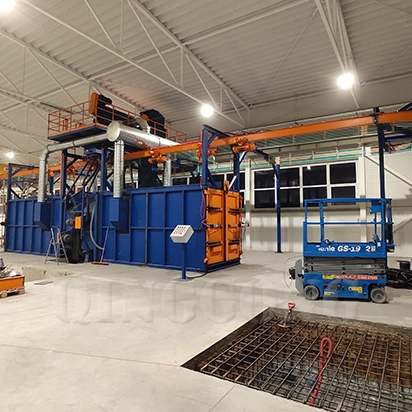
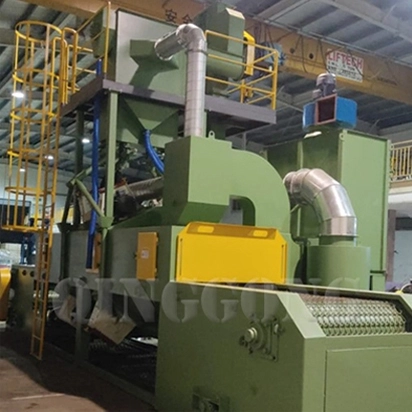
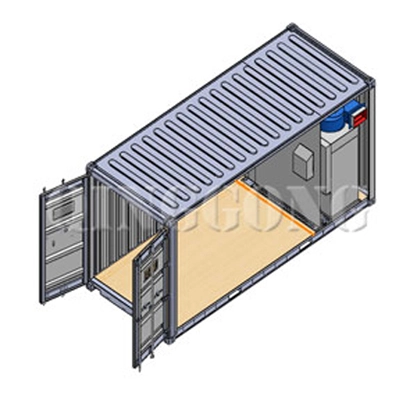
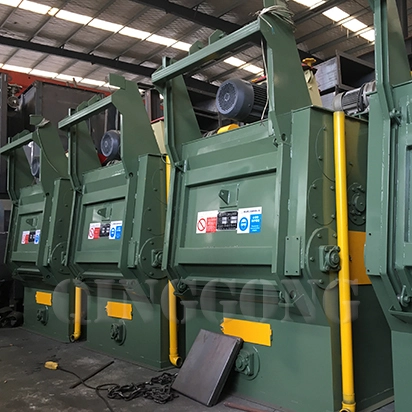
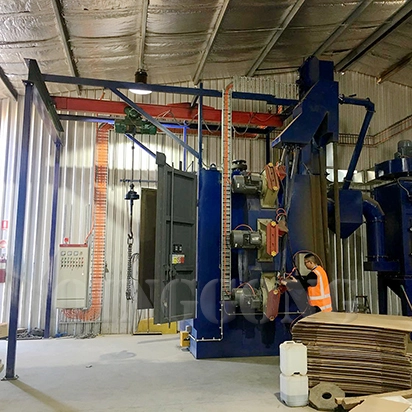
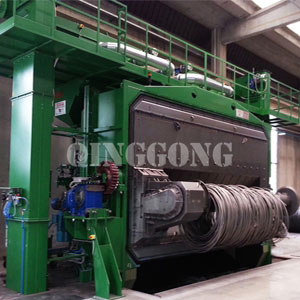
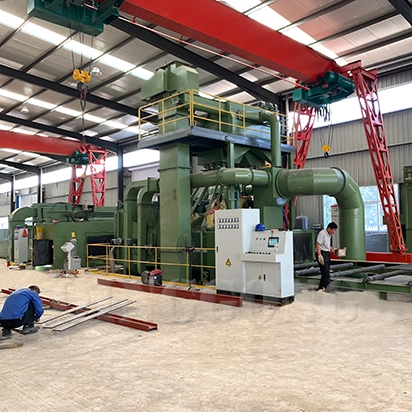
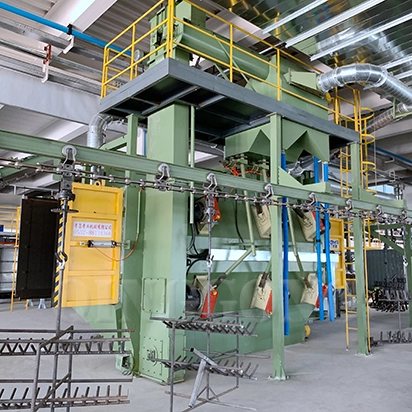
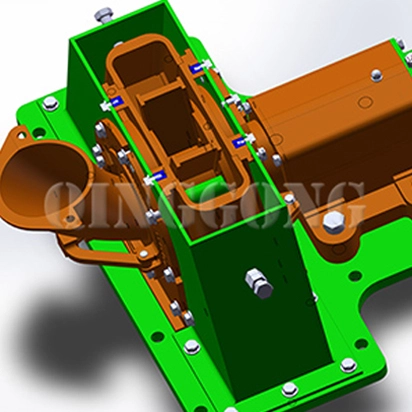
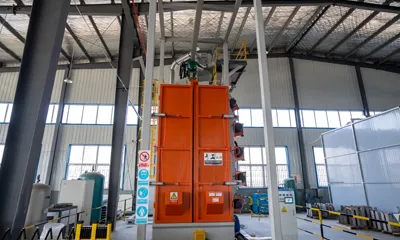
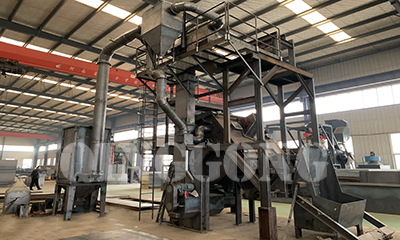
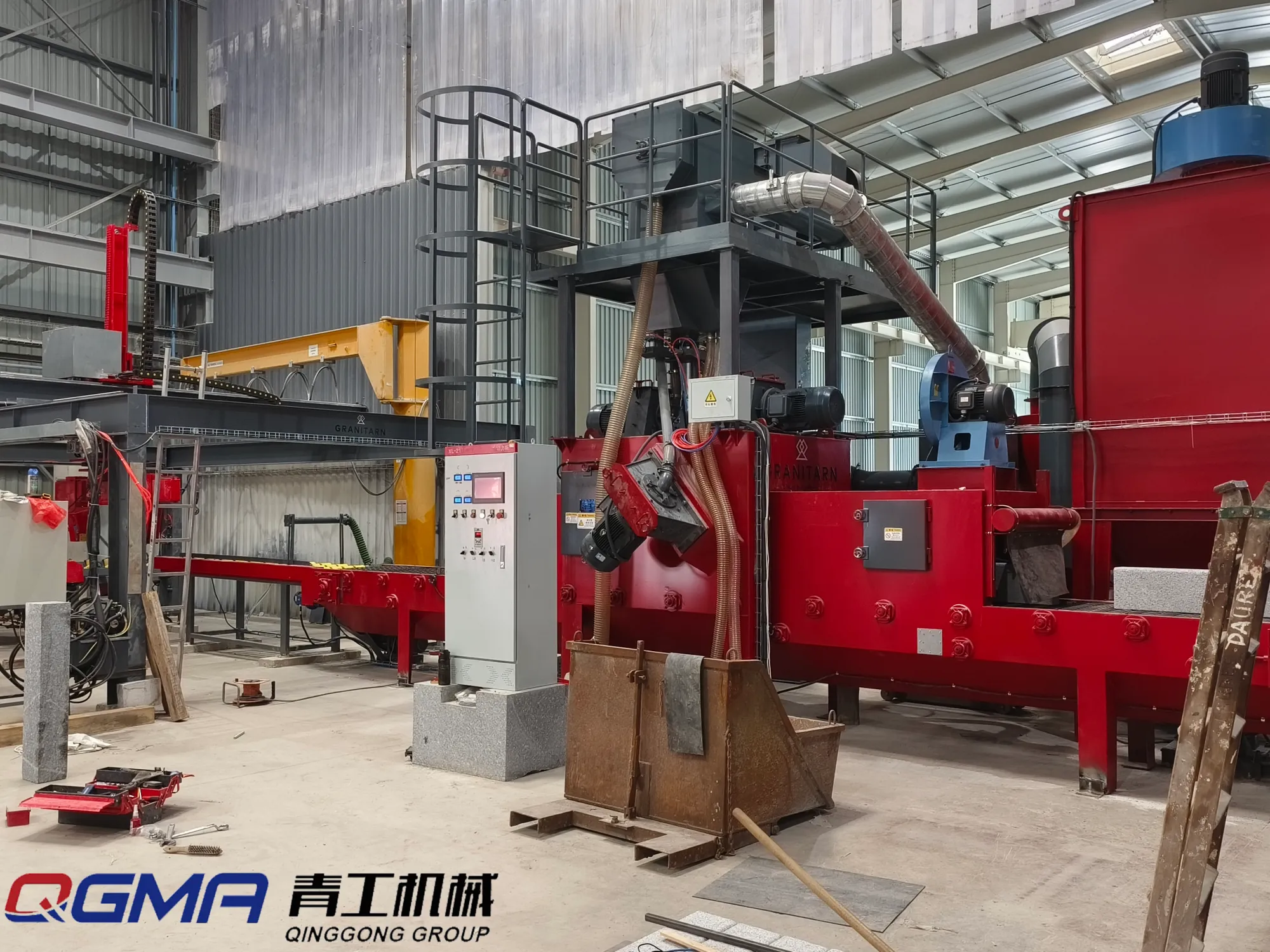
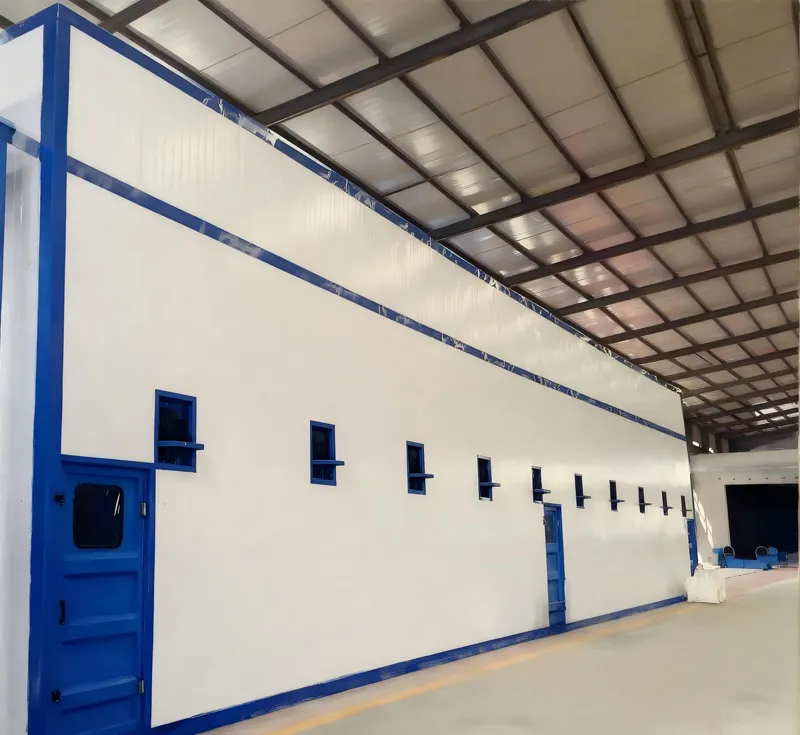
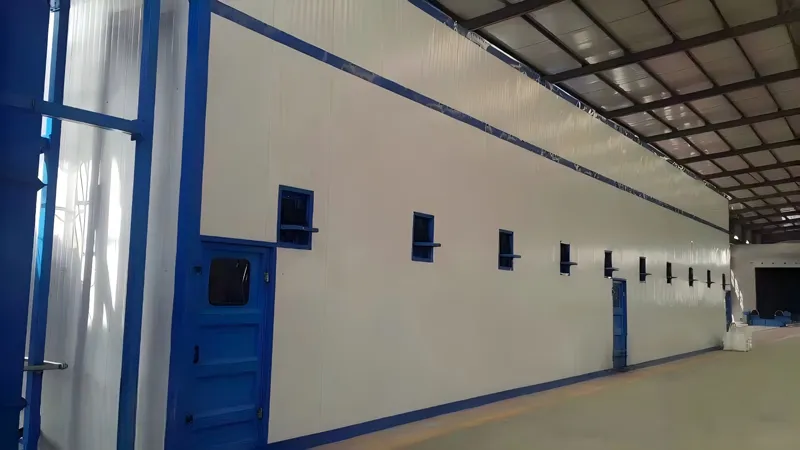
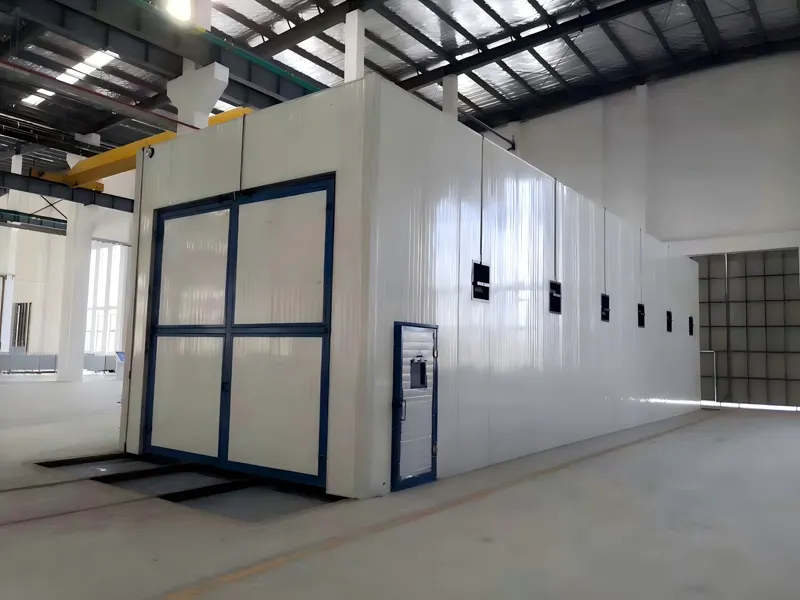
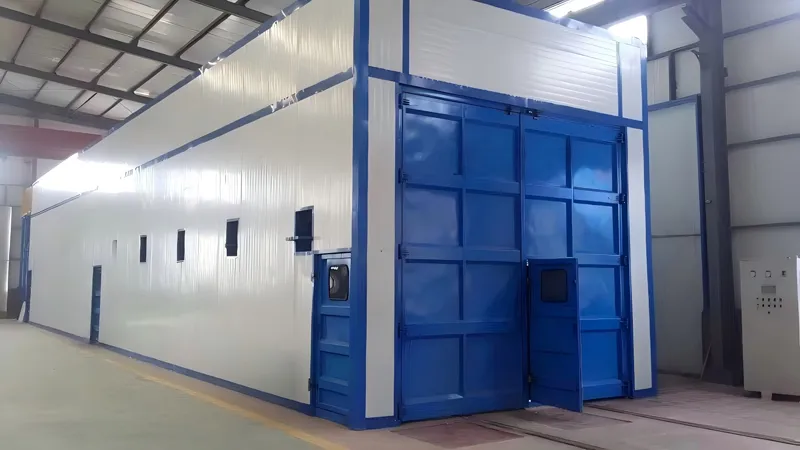
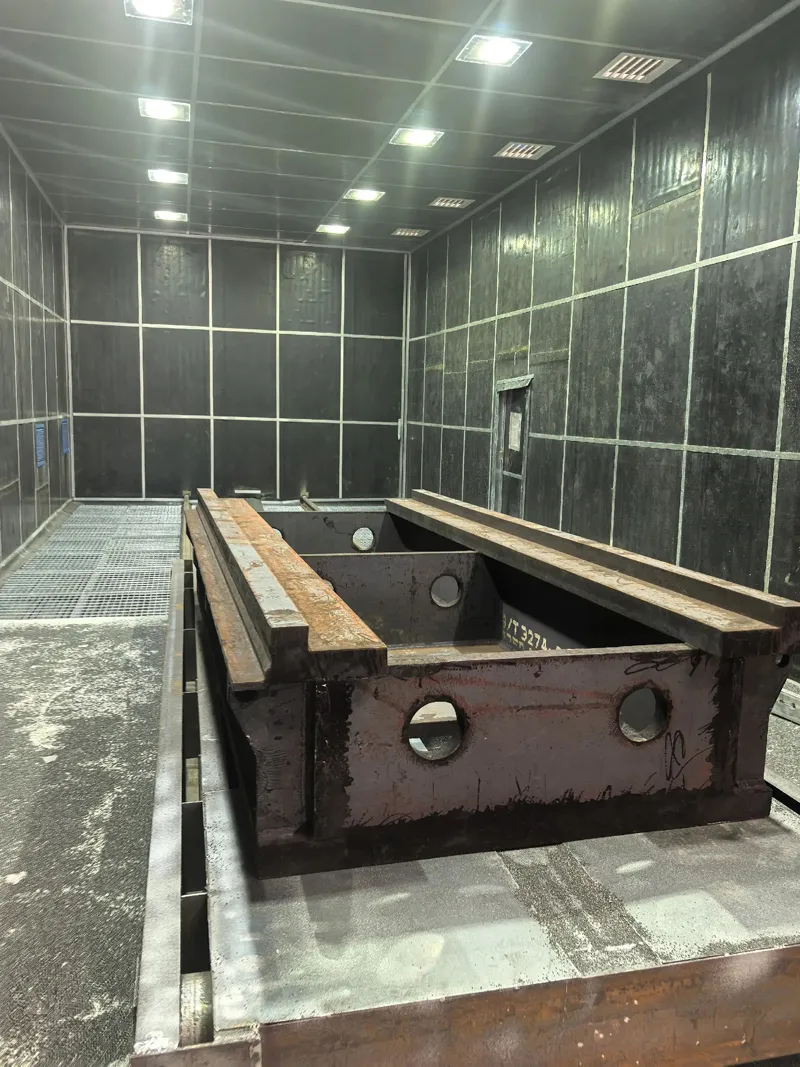
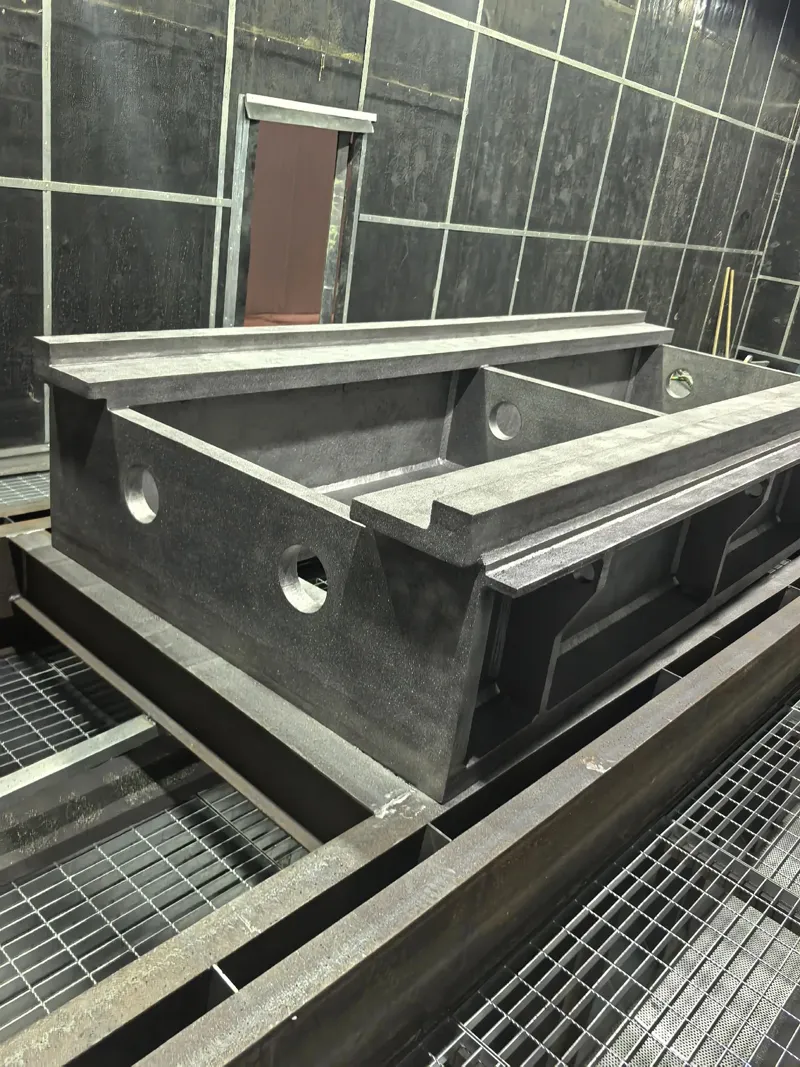
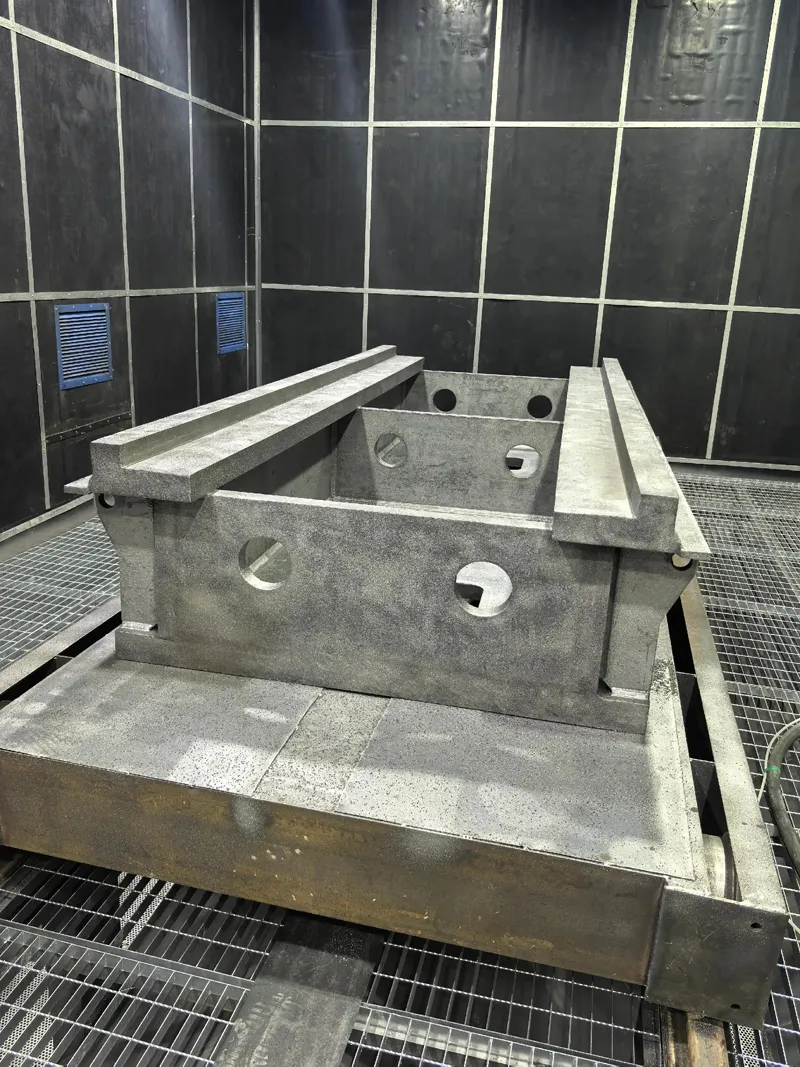
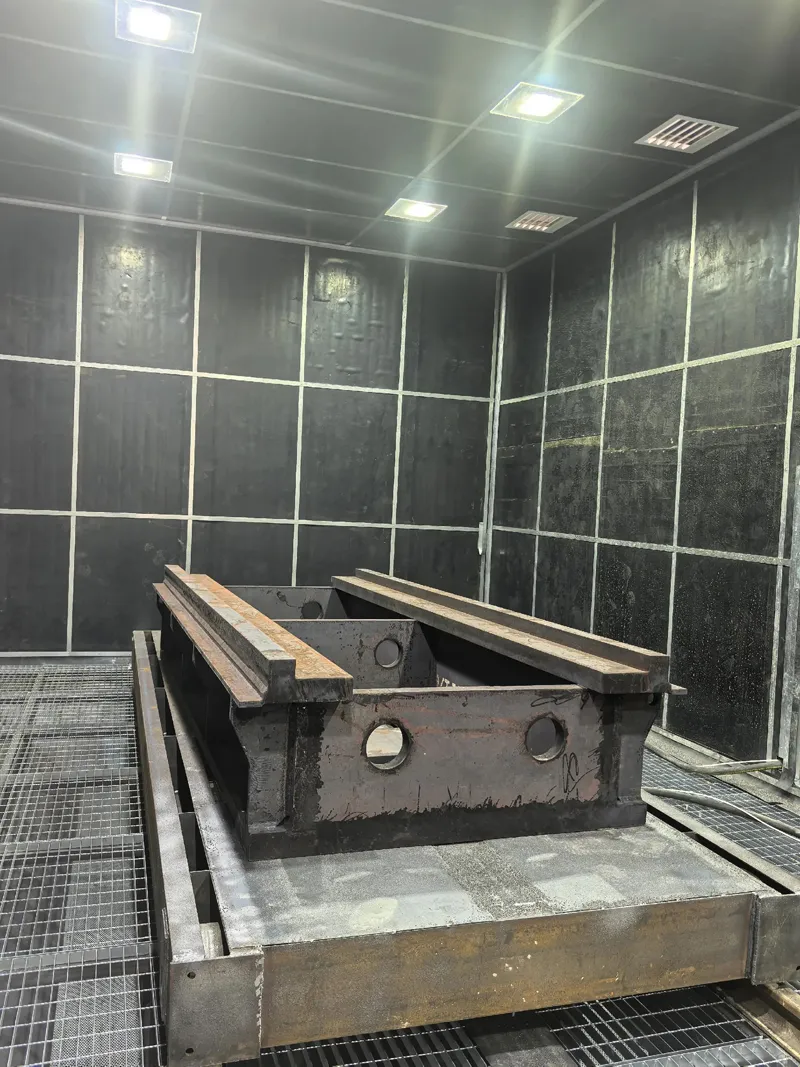
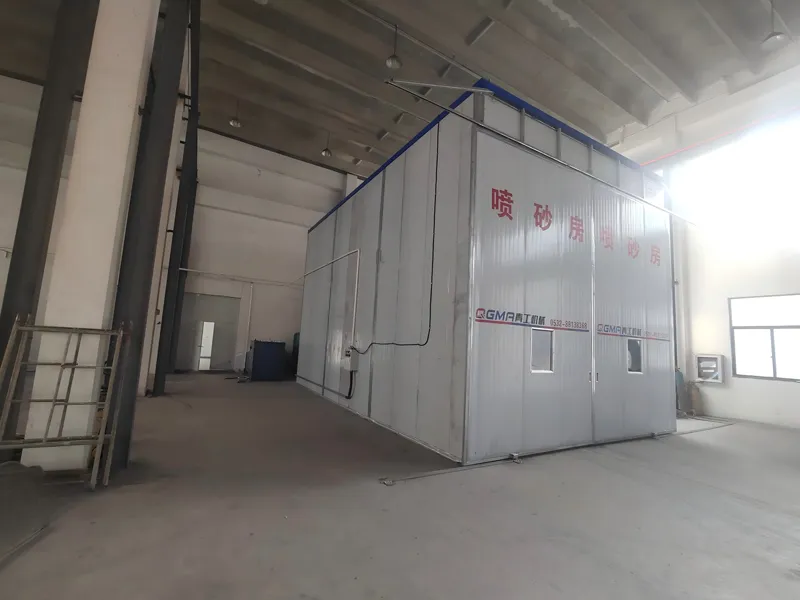
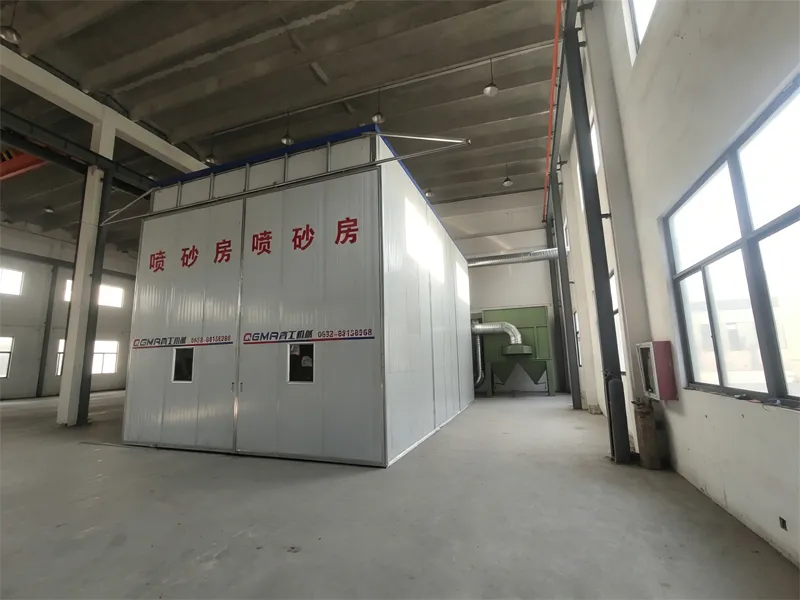
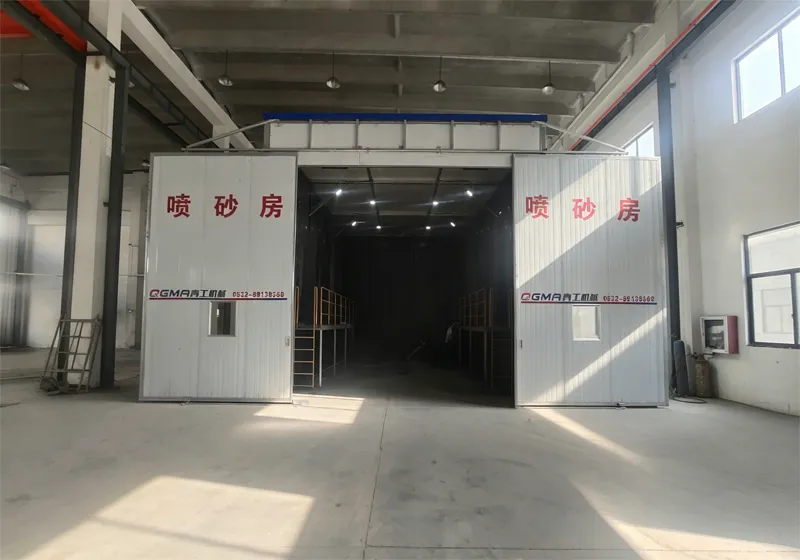
This equipment is a dedicated dry enclosed sandblasting chamber designed for the coating preparation of heavy steel structural components; its internal dimensions are 7 m (length) × 4 m (width) × 3 m (height). It is suitable for rust removal on heavy-duty structural components such as machine tool bases, mining equipment frames, and welded housings of construction machinery. The system is equipped with a fully automatic ground-based abrasive recovery system, a 0.5 m³ pressure-type sandblasting main unit, a 11 kW centrifugal fan, and a 16-filter-tube pulse dust collection system, enabling enclosed operation, automatic abrasive recycling, and compliant dust emissions, while ensuring stable rust-removal quality that meets Sa2.5 standards.
Applicable workpieces
Maximum overall dimensions: ≤5500 × 3000 × 2200 mm
Single-item load capacity: ≤5 t
Processing procedure: removal of rust, oxide scale, welding slag, and old paint film; roughening pretreatment of the substrate.
Enclosed sandblasting chamber housing system
Major Structure
Frame: National Standard square steel tube + welded load-bearing frame; exterior surface: 50 mm of rock wool soundproofing and thermal insulation color-coated steel plate;
Inner wall protection: Fully covered with 6 mm thick wear-resistant rubber lining, secured by aluminum alloy clamps; designed to withstand high-speed impact from steel grit, reduce noise levels, and prevent sand particles from rebounding or splashing; the rubber features an IRHD38 hardness rating, offering excellent wear resistance and impact resistance;
Ground surface: Heavy-duty load-bearing grid panel with a grid load capacity ≥12 t/m²; below the grid, longitudinal and transverse screw conveyors are installed to collect falling abrasives and rust debris;
Lighting and Ventilation
Top-mounted explosion-proof LED industrial lighting fixture, designed to meet operational lighting requirements.
Top-mounted negative-pressure air intake louvers feature an integrated dust-proof filter that balances the indoor airflow and prevents localized vortex-induced dust accumulation.
Sand-blast equipment
Sandblasting tank body
Effective volume: 0.5 m³; pressure vessel certified for design and manufacture; wall thickness: 10 mm; maximum allowable pressure: 0.8 MPa;
The vessel is fully loaded with steel shot (S280 steel sand) weighing approximately 2.2 t; a single operator can perform continuous sandblasting for 4–6 h without requiring pressure relief or additional sand replenishment;
Equipped with loading/unloading level sensors, pneumatic sand valves, manual shut-off maintenance valves, and pressure regulating valves, enabling precise adjustment of the sandblasting pressure within the range of 0.25–0.7 MPa;
Sandblasting Execution Unit
Includes matching wear-resistant boron carbide sandblasting gun and wear-resistant sand conveying hose;
Supports manual handheld sandblasting for individual parts, enabling comprehensive treatment of internal cavities with round holes, weld seam blind spots, and guide rail mounting surfaces.
Fully Automatic Ground Abrasive Recovery System
Flow of work
Grate sand discharge → centralized conveying by bottom screw conveyor → vertical feeding via bucket elevator → air classification separator → qualified steel sand is returned to the sand blasting tank, while dust and crushed sand are directed to the dust collector.
1. Ground-mounted conveying mechanism: features transverse and longitudinal arranged wear-resistant screws, an integral sealing structure that prevents sand scattering or leakage, and low-speed, smooth conveying;
2. Conveyor-type elevator: features a wear-resistant hopper and chain-driven system; equipped with a sealed enclosure; its lifting efficiency is designed to meet the sand supply requirements for sandblasting applications;
3. Wind-sieving Screening Integrated Machine
4. Wind-based sorting: fine sand resulting from crushing failure and iron rust dust are separated and fed into the dust removal system;
5. The abrasive automatic reflux sandblasting tank is reused with complete functionality and meets all specifications, and the comprehensive abrasive recovery rate is ≥92%;
6. Automatic slag discharge: accumulated rust waste is automatically discharged via a single button press on a regular basis.
superiority
Eliminates the need for manual cleaning of ground sand, enables continuous batch operations, and significantly reduces labor costs as well as steel sand consumables wear.
Dust Removal and Purification System (11 kW centrifugal fan + 16 filter cartridge dust collectors)
1. fan
Motor power: 11 kW; Centrifugal high-pressure fan; rated air volume: 19,000–21,000 m³/h;
Ensure stable negative pressure within the room, with a ventilation rate>20 times/h; provide clear working visibility and prevent any leakage of dust;
2. Filter cartridge dust removal system
Number of filter cartridges: 16 PTFE-coated flame-retardant filter cartridges, with a filtration accuracy of 0.3 μm;
Smart pulse-blast cleaning: automatically performs timed pulse cleaning of filter cartridges to remove accumulated dust; features automatic differential pressure monitoring with audible and visual alerts when the differential pressure exceeds the set threshold;
Total dust removal efficiency ≥ 99.99%; the exhaust gas cleanliness meets local environmental protection online monitoring requirements, with no exceedances of dust emission limits;
3. Equipped with a sealed ash collection drawer; regularly clean solid rust dust and waste residue.
Intelligent Electrical Control System
1. Interlocking logic: door interlock; fan pre-start; coordinated start/stop of the recovery system; sandblasting system interlocking protection;
2. Safety Features: Multiple emergency stop buttons within the enclosure; audible and visual operation warnings; overload protection; phase loss protection; and motor overheat protection;
3. Operating modes: Manual single-stage debugging mode and fully automatic coordinated production mode.
Equipment Operating Process Flow
1. Material loading and positioning: The crane lifts the heavy-duty base workpiece to the load-bearing platform inside the room; then, the door is closed, and the electrical interlock is verified as engaged;
2. System startup: One-click start of the dust removal fan → The abrasive recovery system operates under no-load conditions, establishing negative pressure inside the chamber;
3. Sandblasting operation: Turn on the air supply for the sandblasting tank; the operator shall wear protective equipment, enter the room, and operate the sandblasting gun; steel grit is used to blast away rust and oxide scale, while falling abrasives are automatically recovered, sorted, and recycled;
4. Job completion procedure: After sandblasting is completed, perform a delayed blowdown to remove dust; evacuate all dust from the chamber; shut down the sandblasting main unit; allow the recovery system to continue operating for 5 minutes to clear the floor of sand;
5. Workpiece outbound: Disengage the door interlock; hoist the workpiece and transfer it to the painting process.
 EN
EN
 fr
fr  de
de  es
es  it
it  ru
ru  pt
pt  ar
ar  th
th  pl
pl  ro
ro