EN
EN
 fr
fr  de
de  es
es  it
it  ru
ru  pt
pt  ar
ar  th
th  pl
pl  ro
ro 
Modern paving and stone products need more than structural strength. Their surface appearance, texture, cleanliness, and slip resistance can also affect their performance and market value. A Paver Blocks Shot Blasting Machine provides an efficient way to create controlled surface textures on concrete pavers, marble, granite, kerbstones, and other stone products.
Unlike conventional manual surface treatment, automated shot blasting uses abrasive media accelerated by blast wheels to impact the workpiece surface. This process can expose aggregates, remove surface contaminants, and create a uniform textured appearance.
For manufacturers handling large production volumes, choosing the right pavers shot blasting machine means considering product dimensions, required finish, production speed, blast wheel configuration, and abrasive recovery.
What Is a Paver Blocks Shot Blasting Machine?
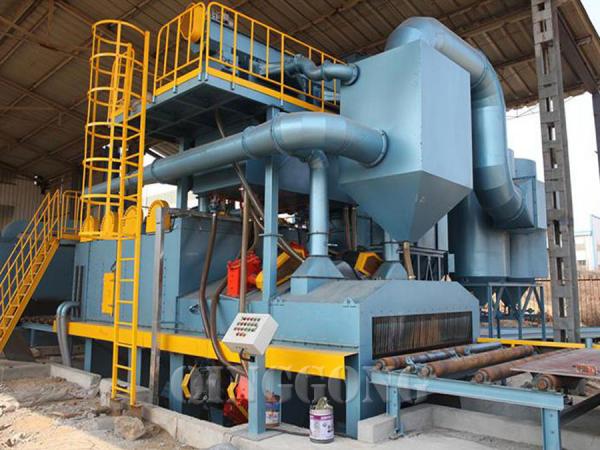
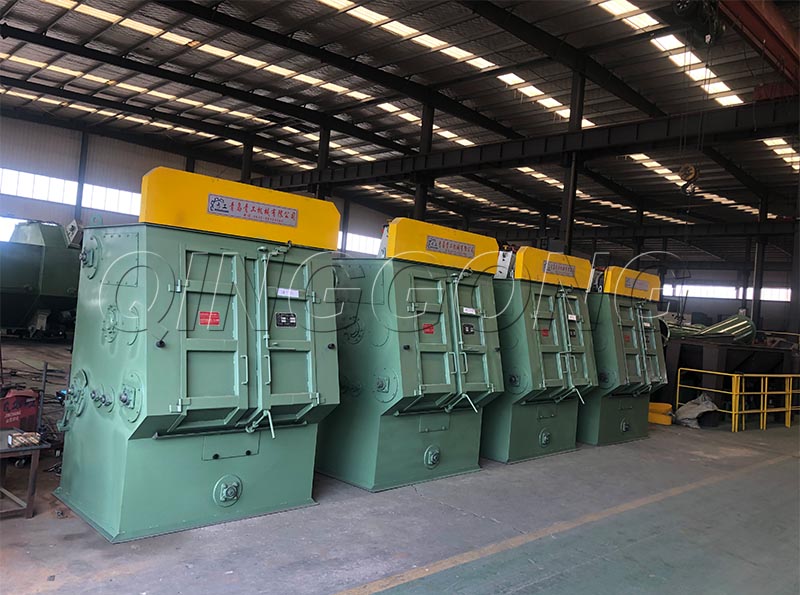
A Paver Blocks Shot Blasting Machine is specialized equipment designed for continuous surface treatment of paving blocks and stone products. It can be used as a bricks shot blasting machine, or concrete surface treatment system depending on the workpiece.
The process accelerates abrasive particles through rapidly rotating blast wheels. When the abrasive impacts the surface, it removes unwanted cement residue and creates controlled roughness. On stone products, this can expose aggregates and produce decorative effects.
According to ASTM C936/C936M, interlocking concrete pavers are manufactured for paved surfaces, while properties such as surface texture and finish may be specified according to the purchaser's requirements.
This makes surface treatment an important consideration when producing pavers for different architectural and outdoor applications.
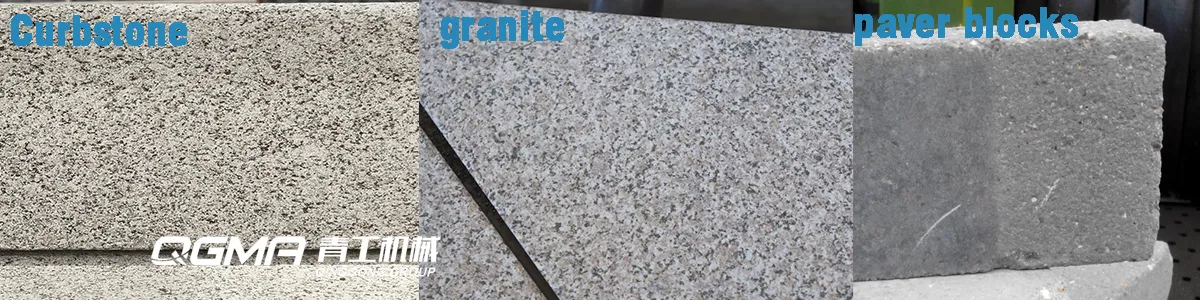
Applications of Stone and Paver Shot Blasting
A modern shot blasting machine for stone can process a wide range of materials, including:
Concrete paving blocks
Marble and granite
Artificial stone
Kerbstones
Cement bricks
Pavement bricks
Natural stone products
Floor and decorative tiles
The process is particularly useful when manufacturers want a consistent textured surface rather than a polished or completely smooth finish.
Paver and Concrete Products
For concrete pavers, shot blasting can remove surface cement and expose aggregates, producing a more distinctive appearance. The resulting texture can also contribute to improved traction in appropriate paving applications.
The shot blasted paving process can therefore serve both decorative and functional purposes.
Marble and Natural Stone
A shot blasting machine for marble can create controlled roughness and decorative surface effects. Depending on abrasive type, blast intensity, and conveyor speed, manufacturers can produce different finishes, including antique-style effects.
This makes stone shot blasting useful for architectural stone, landscape products, flooring materials, and other decorative applications.
Kerbstones
A Kerbstone shot blasting machine is suitable for continuous treatment of curbstones and similar municipal products. ShotBlastPro notes that its paver blasting equipment can process marble, granite, curbstone, cement brick, pavement brick, and other materials.
How to Choose the Right Machine
Selecting equipment should start with the workpiece rather than the machine price alone.
Selection Factor | What to Consider |
Product length | Choose roller conveyor or rubber belt configuration |
Product width | Match working width to the largest paver |
Product height | Confirm chamber clearance |
Surface finish | Adjust abrasive, wheel speed, and exposure time |
Production volume | Choose continuous equipment for high-volume production |
Blast direction | Consider top-only or multi-directional blasting |
Automation | Check conveyor, abrasive recycling, and control systems |
Dust management | Include an appropriate dust collection system |
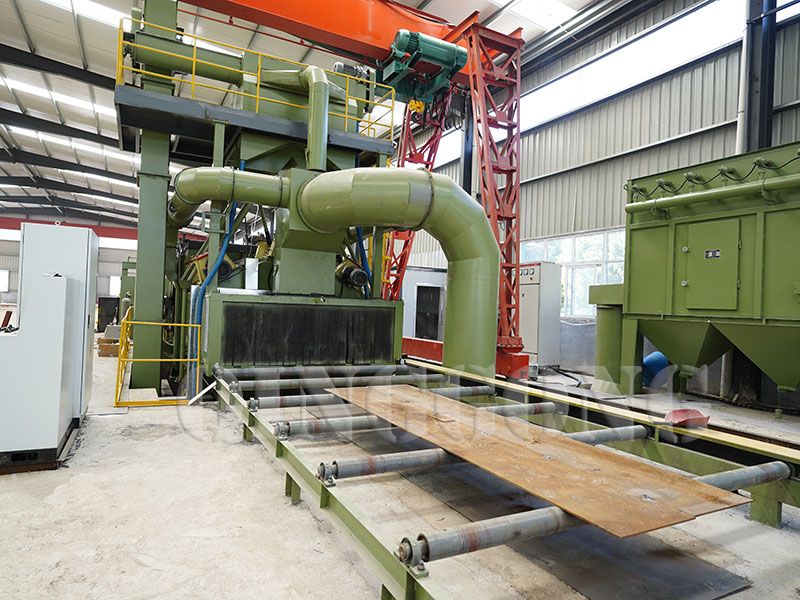
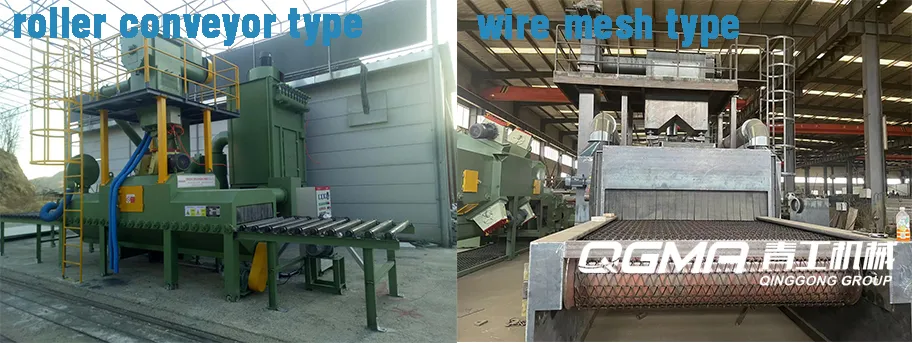
ShotBlastPro's QGS roller conveyor series is designed for pavers 60 cm or longer, while its QGM wire mesh series is intended for shorter pavers. Both configurations are available in working widths from 600 to 1500 mm, with adjustable working speeds.
This type of configuration allows manufacturers to select equipment according to product size instead of using a one-size-fits-all solution.
Surface Finish Control Is Critical
One of the most important advantages of automated shot blasting is process control.
The conveyor speed determines how long the workpiece remains inside the blasting zone. Blast wheel speed, abrasive type, abrasive flow, and wheel position also influence the final surface.
For example, a manufacturer producing decorative concrete pavers may require a different finish from a manufacturer processing architectural marble. Excessive blasting can create an unnecessarily rough surface, while insufficient blasting may fail to expose enough aggregate.
For European markets, EN 1338 establishes requirements and test methods for precast concrete paving blocks used in pedestrian and vehicular applications, covering areas such as dimensions, mechanical properties, wear, and other performance characteristics.
Therefore, trial blasting and process parameter adjustment should be part of equipment selection.
Continuous Production and Abrasive Recovery
For high-volume production, continuous feeding can significantly improve productivity. Instead of manually treating individual pavers, products can enter the blasting chamber through a conveyor system.
Abrasive recovery is equally important. Reclaim systems collect used abrasive and contaminants so that suitable media can be separated and returned to circulation. A dust collector can also help control airborne particles during operation.
ShotBlastPro states that its paver blasting equipment can be integrated into production lines using transfer stations and control interfaces. A blow-off station can remove residual abrasive from the finished surface before the product leaves the machine.
For manufacturers with automated production lines, these features can reduce manual handling and improve consistency.
Paver Shot Blasting vs. Sandblasting Pavers
Although both processes can modify a surface, they are not identical.
A Paver Blocks Shot Blasting Machine uses accelerated abrasive particles from blast wheels, making it particularly suitable for continuous industrial production. Sandblasting pavers, by contrast, generally uses compressed air to propel abrasive through a nozzle.
Shot blasting is often preferred for high-volume paver and stone production because multiple blast wheels can treat products continuously as they pass through the machine.
The choice ultimately depends on the material, desired texture, production volume, and required automation level.
Consider Standards When Defining Product Requirements
Machine selection should also be connected to the requirements of the finished paving product.
ASTM C1782/C1782M covers segmental concrete paving slabs for commercial and municipal applications and addresses properties such as modulus of rupture, dimensional tolerances, freeze-thaw resistance, visual inspection, sampling, and testing.
These standards do not prescribe one universal blasting process. Instead, they help manufacturers understand the broader performance requirements that paving products may need to satisfy.
Consequently, blasting parameters should be developed together with the desired product specifications rather than selected independently.
.webp "consider standards when defining product requirements 1")
.webp "consider standards when defining product requirements 2")
.webp "consider standards when defining product requirements 3")
Why Choose a Customized Paver Shot Blasting Solution?
Different pavers and stone products require different processing conditions. A machine designed for small concrete blocks may not be suitable for large marble slabs or long kerbstones.
A customized solution can consider:
Product dimensions
Conveyor configuration
Number and position of blast wheels
Required surface effect
Production capacity
Abrasive recycling
Dust collection
Automatic controls
Integration with existing production lines
For manufacturers processing multiple product types, adjustable machine parameters can provide greater production flexibility.
FAQ
1. What materials can a Paver Blocks Shot Blasting Machine process?
It can process concrete pavers, marble, granite, artificial stone, kerbstones, cement bricks, pavement bricks, and similar products.
2. What is the purpose of shot blasting pavers?
The process can remove surface cement and contaminants, expose aggregates, and create a controlled textured or decorative finish.
3. Can the machine process marble and granite?
Yes. A suitable shot blasting machine for marble or granite can create roughened or decorative surfaces according to the selected blasting parameters.
4. How do I select the correct machine size?
Consider the maximum product length, width, height, production volume, and required blasting direction. Conveyor configuration should match the product dimensions.
5. Can paver shot blasting equipment be integrated into a production line?
Yes. Continuous conveyor systems can be connected with transfer stations, abrasive recycling, dust collection, and blow-off equipment for automated production.
Conclusion
A Paver Blocks Shot Blasting Machine can transform the surface treatment stage from a labor-intensive process into a controlled and repeatable production operation. By adjusting conveyor speed, blast wheel configuration, abrasive type, and blasting intensity, manufacturers can produce consistent textures on concrete pavers, marble, granite, and kerbstones.
The right pavers shot blasting machine should be selected according to product dimensions, surface requirements, production volume, and automation needs. For manufacturers serving architectural, landscaping, municipal, and stone-processing markets, these factors provide a practical basis for choosing reliable shot blasting equipment.