EN
EN
 fr
fr  de
de  es
es  it
it  ru
ru  pt
pt  ar
ar  th
th  pl
pl  ro
ro 
.webp "how to choose the right sand blasting room for industrial surface preparation")
Industrial surface preparation requires more than simply selecting a powerful blasting machine. For large steel structures, tanks, fabricated components, castings, and machinery, the enclosure itself plays an important role in productivity, abrasive recovery, dust control, and operator safety. A properly designed sand blasting room provides a controlled environment where blasting can be performed efficiently while containing abrasive and dust.
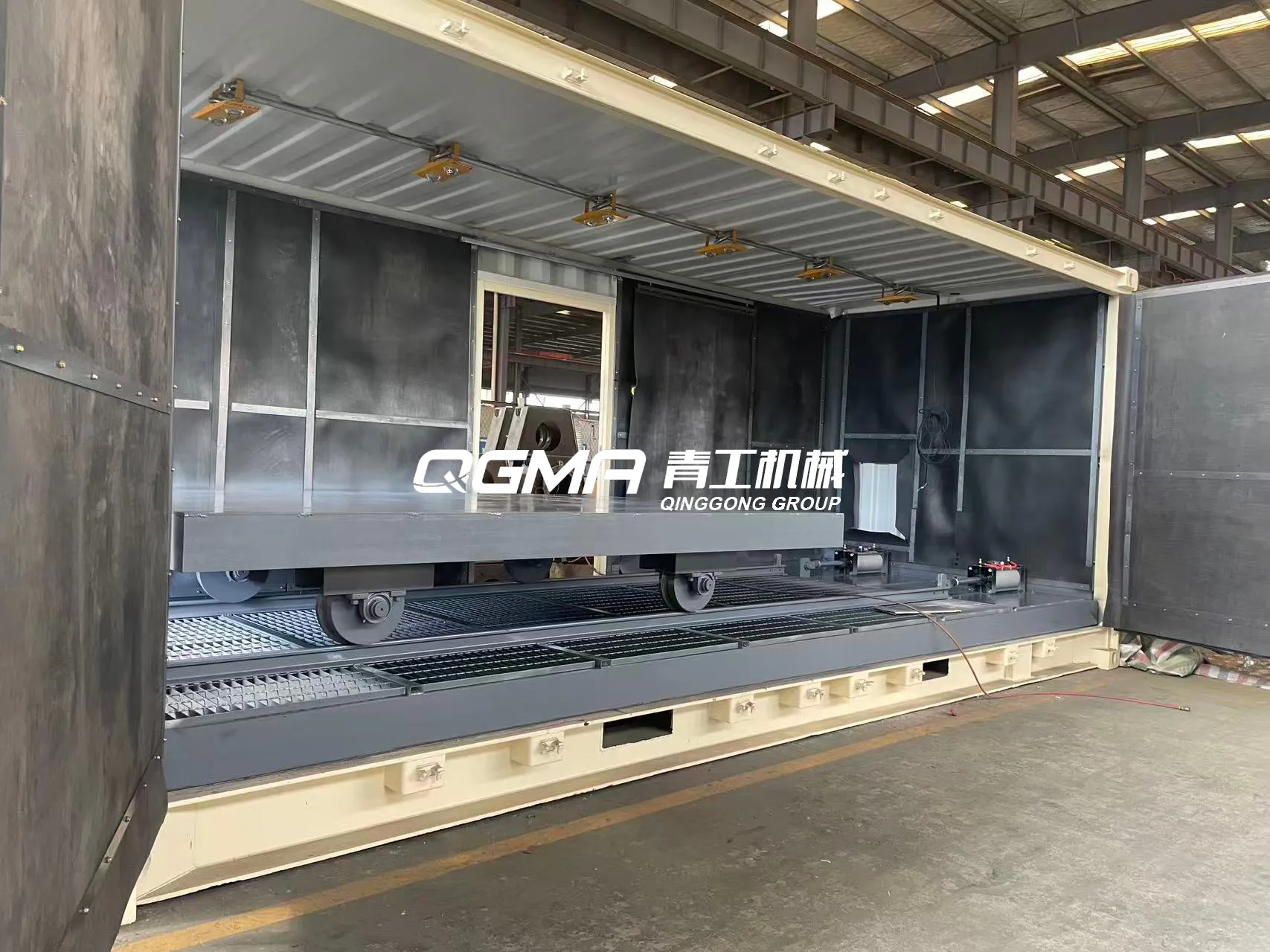
For factories with limited space or temporary production requirements, a sand blasting container can be an especially practical solution. QGMA offers container-based and customized blasting solutions designed around different workpiece sizes, recovery systems, dust collection requirements, and production conditions.
What Is a Sand Blasting Room?
A sand blasting room is an enclosed workspace designed for abrasive blasting of workpieces that are too large for conventional blasting machines . Unlike a shot blasting machine for sale, where the operator generally works from outside the enclosure, a blasting room is large enough to accommodate both the workpiece and the blasting operator.
According to the OSHA requirements for abrasive blasting ventilation, blasting enclosures should maintain inward airflow during blasting, while exhaust systems should remove dust-laden air and discharge it through appropriate dust-collecting equipment.
This makes ventilation and dust collection fundamental parts of modern shot blasting rooms, rather than optional accessories.
Sand Blasting Room vs. Blasting Cabinet vs. Blasting container
The terms sand blasting room, sand blasting booth, and blasting cabinet can describe different types of abrasive blasting equipment.
Equipment | Typical Workpiece | Main Advantage | Typical Application |
Sand blasting room | Large/irregular workpieces | Large working area | Steel structures, tanks, machinery |
Blasting booth | Medium to large parts | Flexible enclosure | Fabrication and maintenance |
Blasting cabinet | Small to medium parts | Compact operation | Components and small parts |
Blasting container | Large or mobile projects | Transportability | Temporary or space-limited sites |
Sandblasting hall | Very large structures | Maximum capacity | Shipbuilding, steel fabrication |
A sand blasting chamber or booth is generally selected according to the size and shape of the workpiece, blasting method, production volume, and available factory space.
Why Choose a Blasting Container?
A portable container blasting room can be useful when a permanent building is unavailable or when blasting needs to take place at different locations.
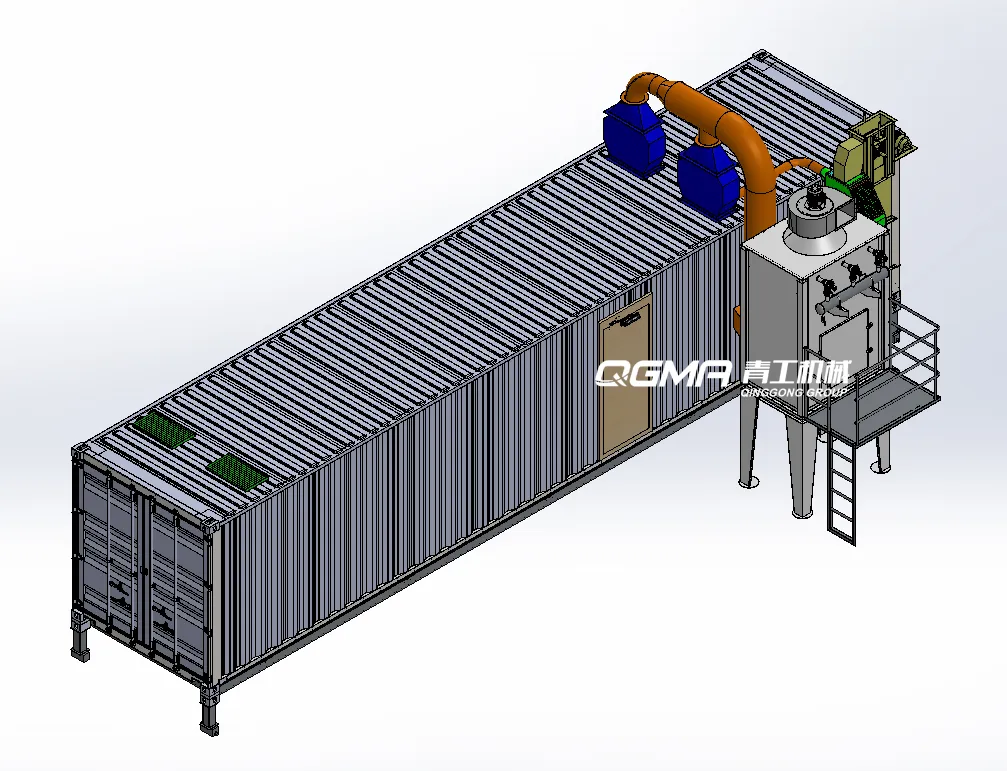
QGMA's container blast room design uses new 20-foot, 40-foot, or 40HQ containers as the blasting chamber. The container format can reduce fabrication and installation requirements while making the system easier to transport. The manufacturer's design also allows customers to specify recovery and dust collection configurations according to their operating requirements.
A container solution can therefore be considered when:
Factory floor space is limited.
A temporary blasting site is required.
The blasting operation may need to be relocated.
Large workpieces cannot fit into conventional cabinets.
A self-contained blasting environment is preferred.
The container can also be weatherproofed for indoor or outdoor placement, depending on the project configuration.
Key Components of a High-Performance Blasting Room
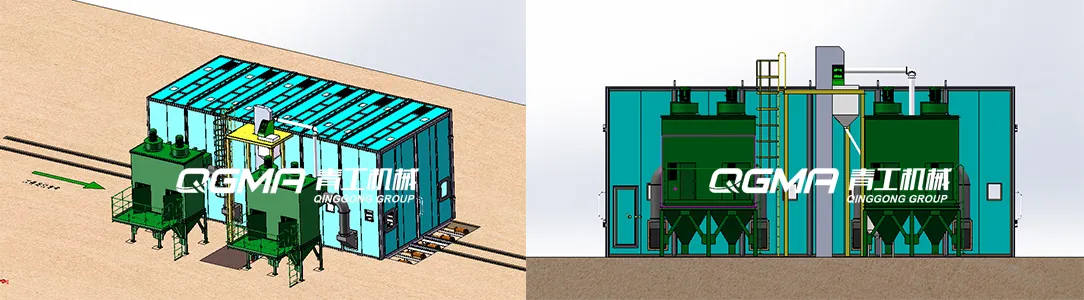
A professional blasting room should be considered as a complete system rather than an empty enclosure.
1. Abrasive Recovery System
Efficient abrasive recovery reduces manual cleaning and helps recover reusable media. Depending on the design, recovery may use screw conveyors, scraper systems, or vacuum-based systems.
QGMA's container systems can be configured with a single screw conveyor or scraper recovery system. More advanced systems may also incorporate separators and bucket elevators to return reusable abrasive to the blasting equipment.
2. Dust Collection and Ventilation
Dust collection affects visibility, working conditions, equipment cleanliness, and overall safety. OSHA specifies that blast-cleaning enclosures should maintain inward airflow and that exhausted air should pass through dust-collecting equipment.
NIOSH also identifies enclosure and local exhaust ventilation as important engineering controls for reducing exposure during dusty work.
Therefore, when comparing a sand blasting booth for sale, buyers should evaluate the complete airflow and dust collection system instead of focusing only on the chamber price.
3. Protective Internal Lining
The walls and other internal surfaces are exposed to continuous abrasive impact. Abrasion-resistant rubber lining can protect the enclosure and extend its service life.
4. Lighting and Safety Controls
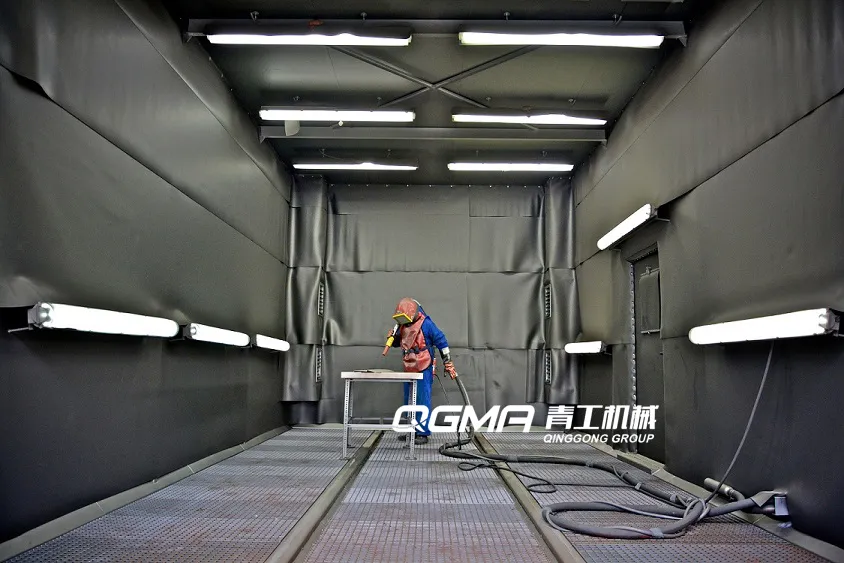
Good visibility is essential for manual blasting. QGMA container blasting rooms can incorporate dustproof LED lighting, blast shields, and door interlocks. These features help operators see the workpiece while reducing the escape of abrasive media from the enclosure.
How to Select a Customized Sand blasting room
A customized sand blasting room should be designed around the actual production process rather than selected solely by standard dimensions.
Consider the following factors:
Workpiece Dimensions
Measure the maximum length, width, height, and weight of the workpiece. Allow additional operating space for the operator, blasting hose movement, loading equipment, and maintenance access.
Loading Method
Heavy tanks and steel structures may require cranes or forklifts. A crane opening can be incorporated into a customized blasting room when overhead handling is necessary.
Abrasive Type
Different applications may use steel shot, steel grit, garnet, cut wire shot, aluminum oxide, or glass bead. The selected media influences wear protection, recovery, separation, and dust collection requirements.
Production Volume
A low-volume repair shop may need a simpler manual system, while a steel fabrication facility may require larger recovery capacity and higher airflow. QGMA provides different industrial blasting equipment configurations for these operating conditions.
Shot Blast Room Selection Guide
Requirement | Recommended Solution |
Small components | Shot blast cabinet |
Medium fabricated parts | Blast booth |
Large tanks | Industrial blasting room |
Steel structures | Large shot blast room |
Temporary project | Blast container |
Limited factory space | Portable container blast room |
Customized workpiece dimensions | Customized sandblasting chamber |
High-volume production | Automated blasting and recovery system |
For large industrial applications, a dedicated automated blasting machine may be more productive than a manually operated blasting room. The correct choice depends on workpiece geometry, throughput, and required surface preparation quality.
Safety Considerations for Sand Blasting Rooms
Safety should be considered during the design stage. Abrasive blasting can generate respirable dust from both the abrasive and the coating or material being removed. OSHA requires appropriate respiratory protection in relevant abrasive-blasting operations.
The UK's HSE also recommends measures such as exclusion zones, appropriate abrasive selection, ventilation or vacuum controls, equipment inspection, and suitable respiratory protective equipment for abrasive blasting.
For this reason, buyers should check ventilation, dust collection, door sealing, lighting, emergency access, protective lining, and operator PPE when evaluating a sand blasting room.
Why Consider QGMA for a China Made Sand Blasting Room?
Choosing a China made shot blasting room manufacturer can provide access to customized dimensions and different recovery configurations. QGMA's container blasting room solutions are available in 20ft, 40ft, and 40HQ formats, with different blasting machine capacities and floor recovery options.
QGMA also provides a broader range of sandblasting equipment, including media blasting rooms, abrasive blasting rooms, air blasting rooms, transportable container blasting rooms, tailored blasting rooms, and industrial sand blasting rooms. This allows buyers to compare a container blasting room with a conventional blasting room according to their actual production needs.
For customers looking for a sand blasting room, or complete industrial blasting solution, customization can cover chamber size, abrasive recovery, dust collection, lighting, loading openings, and blasting equipment.
FAQ
What is the difference between a shot blasting room and a blasting cabinet?
A shot blasting room is a permanent, spacious facility designed for large-scale blasting operations, with integrated ventilation, dust collection, and abrasive recovery systems. A blasting container is a more compact, portable solution, typically used for smaller or temporary blasting jobs and easier to relocate.
Is a blasting container suitable for outdoor use?
A container blasting room can be designed for outdoor placement when appropriate weatherproofing and site conditions are provided. QGMA's container blasting rooms are designed to be weather resistant and transportable.
Can a sand blasting room be customized?
Yes. Chamber dimensions, abrasive recovery, dust collection, loading openings, blasting machine capacity, lighting, and other components can be configured according to the application.
What abrasive materials can be used?
Common options include steel shot, steel grit, garnet, cut wire shot, aluminum oxide, and glass bead. The appropriate abrasive depends on the substrate and required surface finish.
How do I choose between a blasting room and a blasting container?
Consider workpiece size, available factory space, mobility requirements, production volume, loading method, and the required recovery and dust collection system. A blasting container is particularly attractive when portability or limited space is important.
Conclusion
The right sand blasting room should provide more than sufficient space for a workpiece. It needs an integrated approach to abrasive recovery, ventilation, dust collection, lighting, internal protection, loading, and operator safety. A blasting container can provide a flexible solution for temporary projects and space-constrained facilities, while a customized blasting room may be better for permanent high-volume operations.
By evaluating the entire blasting system rather than the enclosure alone, buyers can select a more practical solution for steel fabrication, tanks, machinery, castings, agricultural equipment, and other industrial applications. QGMA provides container and customized blasting room configurations to match different workpiece sizes and production requirements.