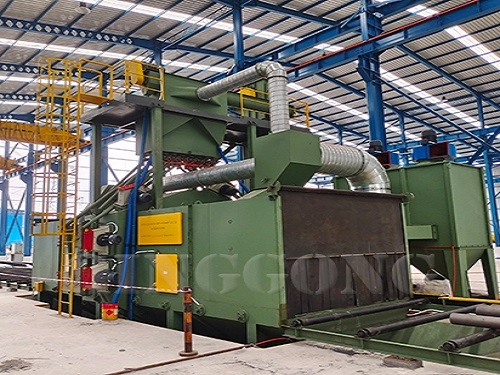
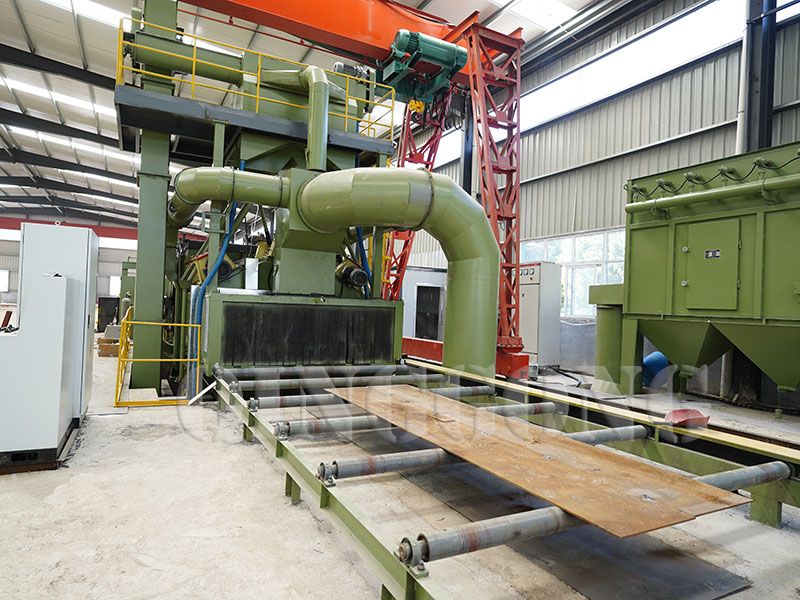
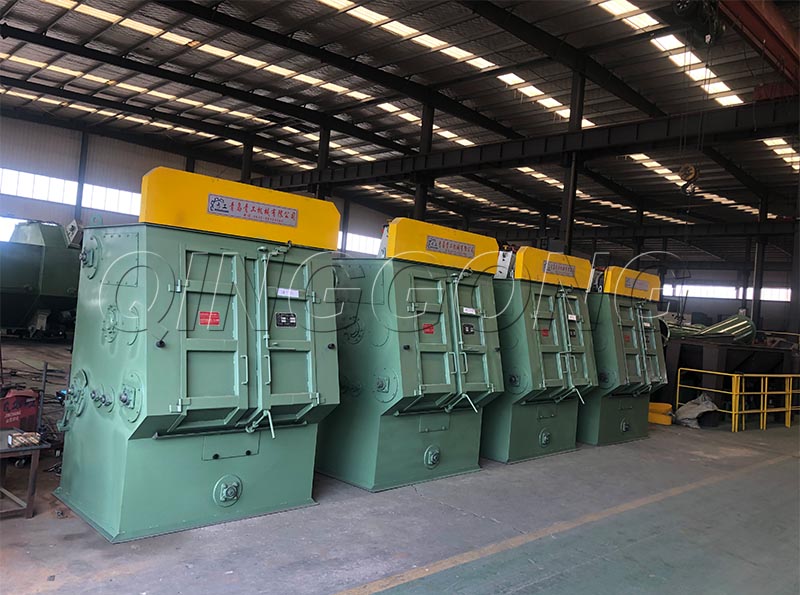
EN
EN
 fr
fr  de
de  es
es  it
it  ru
ru  pt
pt  ar
ar  th
th  pl
pl  ro
ro 
Shot peening is not simply another method of cleaning metal. It is a controlled surface treatment used to improve the fatigue performance of components exposed to repeated mechanical loading. By accelerating small particles against a metal surface, the process introduces beneficial compressive residual stress into the near-surface layer.
This makes a shot peening machine particularly valuable for gears, crankshafts, connecting rods, springs, turbine components, and other parts where fatigue resistance is critical. Unlike conventional blasting equipment, a peening system must control process parameters much more precisely.
For manufacturers comparing a shot peening machine price, the key question should therefore be more than the initial equipment cost. Machine configuration, media control, coverage, automation, loading method, and repeatability can have a greater influence on long-term production value.
What Does a Shot Peening Machine Do?
A shot peening system propels metallic, ceramic, or other suitable media against a component at controlled velocity. The repeated impacts plastically deform a very small region of the surface and create compressive residual stresses.
The principle is recognized in international standards. ISO 12686 describes automated controlled shot peening and notes that the process can introduce compressive residual stresses in surface and near-surface layers.
The effect is especially important for parts exposed to cyclic loads. Surface imperfections can become initiation points for fatigue cracks, so controlling the near-surface stress state can improve component durability.
This is why shot peening equipment is commonly used for:
Automotive gears and crankshafts
Connecting rods
Coil and suspension springs
Aircraft turbine blades
Airframe components
Forged components
Medical implants
High-strength mechanical parts
ShotBlastPro's shot peening systems are designed for applications including gears, springs, automotive components, and aerospace parts, with configurations based on workpiece dimensions and production requirements.
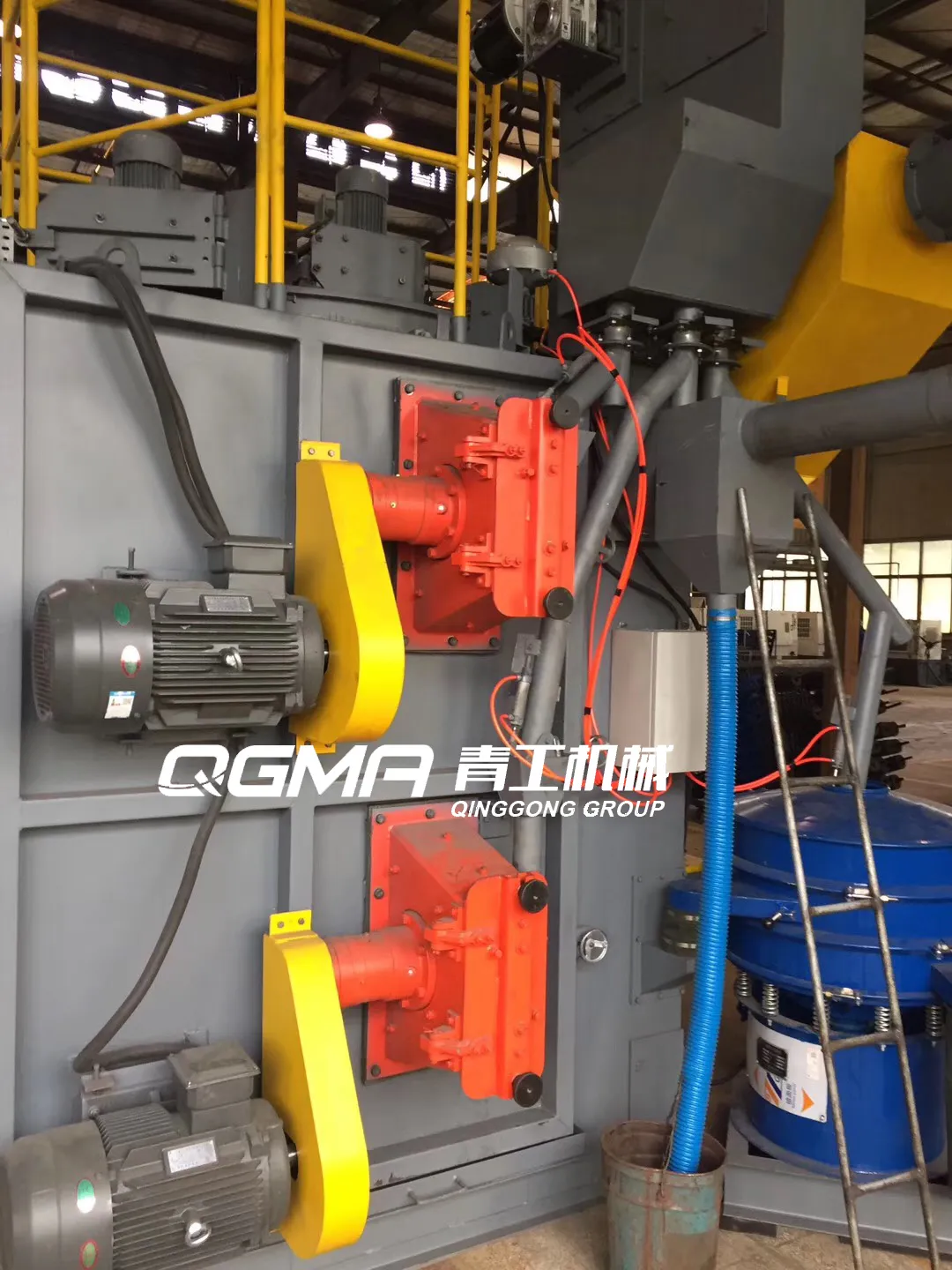
Shot Blasting vs. Shot Peening: The Important Difference
Although the two processes use similar impact principles, their objectives are different.
A shot blasting clean machine is primarily intended to remove rust, scale, sand, burrs, and other contaminants. A shot peening system, in contrast, is designed to modify the mechanical condition of the surface without simply removing material.
Factor | Shot Blasting | Shot Peening |
Primary purpose | Cleaning and preparation | Fatigue-strength improvement |
Process control | Moderate | High |
Media impact | Focused on cleaning | Controlled for peening intensity |
Typical parts | Castings, steel structures | Gears, springs, crankshafts |
Main result | Clean surface | Beneficial compressive stress |
Automation requirement | Depends on application | Usually higher |
For this reason, a standard automatic shot blasting machine should not automatically be considered a substitute for a dedicated peening system.
How to Select a Shot Peening Machine
The correct equipment depends on the geometry, material, production volume, and required peening specification.
1. Start With the Workpiece
A small shot peening machine may be appropriate for compact components, while larger systems are needed for crankshafts, gears, connecting rods, or other long components.
Important parameters include:
Maximum workpiece dimensions
Maximum loading weight
Part geometry
Number of parts per batch
Required coverage
Loading and unloading method
For example, ShotBlastPro lists models with working sizes ranging from approximately 400 mm × 600 mm to 500 mm × 1,100 mm, with loading capacities up to 500 kg in its listed configurations.
2. Choose the Right Blasting Method
Wheel blast equipment is attractive for high-volume production because turbines can deliver abrasive continuously at high throughput. Air-blast systems, meanwhile, can provide more flexible control of blasting direction and localized treatment.
A rotary or multi-chamber configuration can also improve production efficiency by allowing loading and unloading to occur while another chamber is processing.
ShotBlastPro describes multi-chamber carousel configurations in which one chamber can process while other chambers are loaded or unloaded.
3. Consider Automation
An automatic shot peening machine can improve consistency by controlling movement, blasting time, media flow, and workpiece rotation.
Automation is particularly valuable when the same components are processed repeatedly. Instead of relying heavily on manual positioning, the machine can establish a repeatable processing sequence.
For high-volume factories, automation can also connect the peening system with loading equipment, conveyors, inspection stations, and production-line controls.
What Determines Shot Peening Machine Price?
There is no universal shot peening machine price because these systems are typically configured around the application.
Several factors influence the investment:
Cost Factor | Effect on Equipment Cost |
Chamber size | Larger chambers require more structure |
Number of blast wheels | More turbines increase capacity |
Automation | Adds controls and handling systems |
Number of chambers | Supports higher production efficiency |
Workpiece loading | Special fixtures increase customization |
Media recovery | Adds separators, elevators, and conveyors |
CNC control | Provides more programmable processing |
Safety and monitoring | Adds sensors and control components |
A low-cost machine may appear attractive initially, but it may not deliver the required coverage or repeatability. For fatigue-critical parts, process capability should be evaluated together with the purchase price.
Why Process Control Matters More Than Machine Size
A larger machine does not necessarily produce better peening results.
The final effect depends on parameters such as media type and size, velocity, exposure time, coverage, nozzle or turbine position, and workpiece movement. Incorrect settings can result in insufficient treatment or excessive surface deformation.
SAE's AMS2430U Shot Peening specification covers engineering requirements for peening using metallic, glass, or ceramic shot.
For spring manufacturers, ISO 26910-1:2023 specifically establishes general procedures for shot peening springs to improve resistance to fatigue and stress corrosion cracking.
This demonstrates why equipment selection should begin with the required process specification rather than simply asking for the cheapest shot peening machines available.
Applications Where Automated Peening Adds Value
Shot Blasting Machine for Cold Forging Press Components
Cold-forged parts often have complex geometries and can experience high cyclic stresses during service. A shot blasting machine for cold forging press components can be configured for automated surface treatment after forging, depending on whether the requirement is cleaning, peening, or both.
Gears and Crankshafts
Automotive gears and crankshafts are typical fatigue-critical components. Controlled peening can be integrated into a production sequence after machining or heat treatment where required by the component specification.
Springs
Springs undergo repeated loading throughout their service life. Shot peening is therefore widely used in spring manufacturing. ISO 26910-1:2023 specifically addresses the process for springs and its relationship to fatigue and stress-corrosion performance.
Aerospace Components
Turbine blades and airframe components can require tightly controlled surface treatment. For these applications, equipment selection should focus on process repeatability, media management, coverage control, and traceability rather than throughput alone.
_20260918143216.webp "图片1(1).png")
How to Evaluate a Blast Machine for Sale
When comparing a blast machine for sale, ask the supplier for technical information rather than relying only on a catalog price.
A useful evaluation checklist includes:
Maximum and minimum workpiece dimensions
Maximum loading weight
Turbine or nozzle configuration
Media type and size
Workpiece rotation system
Abrasive recovery and separation
Control system and programmable recipes
Required production capacity
Wear protection inside the chamber
Testing capability using representative parts
A supplier should ideally be able to test actual workpieces before finalizing the machine configuration.
Measuring the Result of Shot Peening
Equipment performance should ultimately be connected to measurable process results. Residual stress is one important indicator because the purpose of peening is to establish a beneficial stress condition near the surface.
ASTM E837-25E01 provides a hole-drilling strain-gage method for determining in-plane residual stresses near the surface of isotropic, linearly elastic materials. The standard specifically recognizes compressive stresses produced by shot peening as a potentially beneficial residual stress condition.
Depending on the customer's specification, other process-control methods may also be required, such as intensity verification, coverage inspection, media monitoring, and equipment calibration.
Why Choose ShotBlastPro for Industrial Peening Equipment?
ShotBlastPro, operated by Qinggong Machinery, provides both conventional shot blasting systems and dedicated peening equipment. Its listed shot peening machines include multi-chamber configurations, rotating hangers, and wheel arrangements designed to provide coverage around complex workpieces.
The company also states that its shot blasting machinery is customized according to workpiece conditions and customer requirements, rather than being limited to one standard machine configuration.
For buyers evaluating shot peening equipment, this approach is useful because workpiece geometry, loading method, production volume, and treatment requirements can all affect the final machine design.
FAQ
What is a shot peening machine used for?
It is primarily used to improve the fatigue performance of metal components by introducing controlled compressive residual stress into their surface layers.
Is a shot peening machine the same as a shot blasting machine?
No. Shot blasting mainly removes contaminants or prepares a surface, while shot peening is a controlled strengthening process.
How much does a shot peening machine cost?
The price depends on machine size, blast-wheel quantity, automation, loading method, media recovery, controls, and customization. A specific quotation normally requires workpiece information.
Can a shot peening machine process springs?
Yes. Springs are a common application, and ISO 26910-1:2023 provides general procedures for shot peening springs.
Is wheel blast equipment suitable for automated production?
Yes. Wheel-based systems can provide high abrasive throughput and are suitable for many automated production applications when the turbine arrangement and workpiece handling system are correctly designed.
What should I provide when requesting a quotation?
Provide the workpiece drawings or dimensions, material, weight, production volume, required surface treatment, abrasive specification, loading method, and any applicable process standard.
Conclusion
Selecting shot peening machines should begin with the required engineering result rather than the machine price alone. Workpiece geometry, production volume, media, blast method, automation, coverage, and residual-stress requirements all influence the appropriate configuration.
For high-volume applications, an automatic shot peening machine with controlled handling and repeatable processing can provide greater consistency than manual equipment. For smaller components, a small shot peening machine may offer a more economical solution. For complex automotive, forging, spring, and aerospace components, customized equipment can provide the necessary process control.
With application-focused engineering and testing, ShotBlastPro can help manufacturers select a shot peening system that balances production efficiency, treatment consistency, and total equipment value.